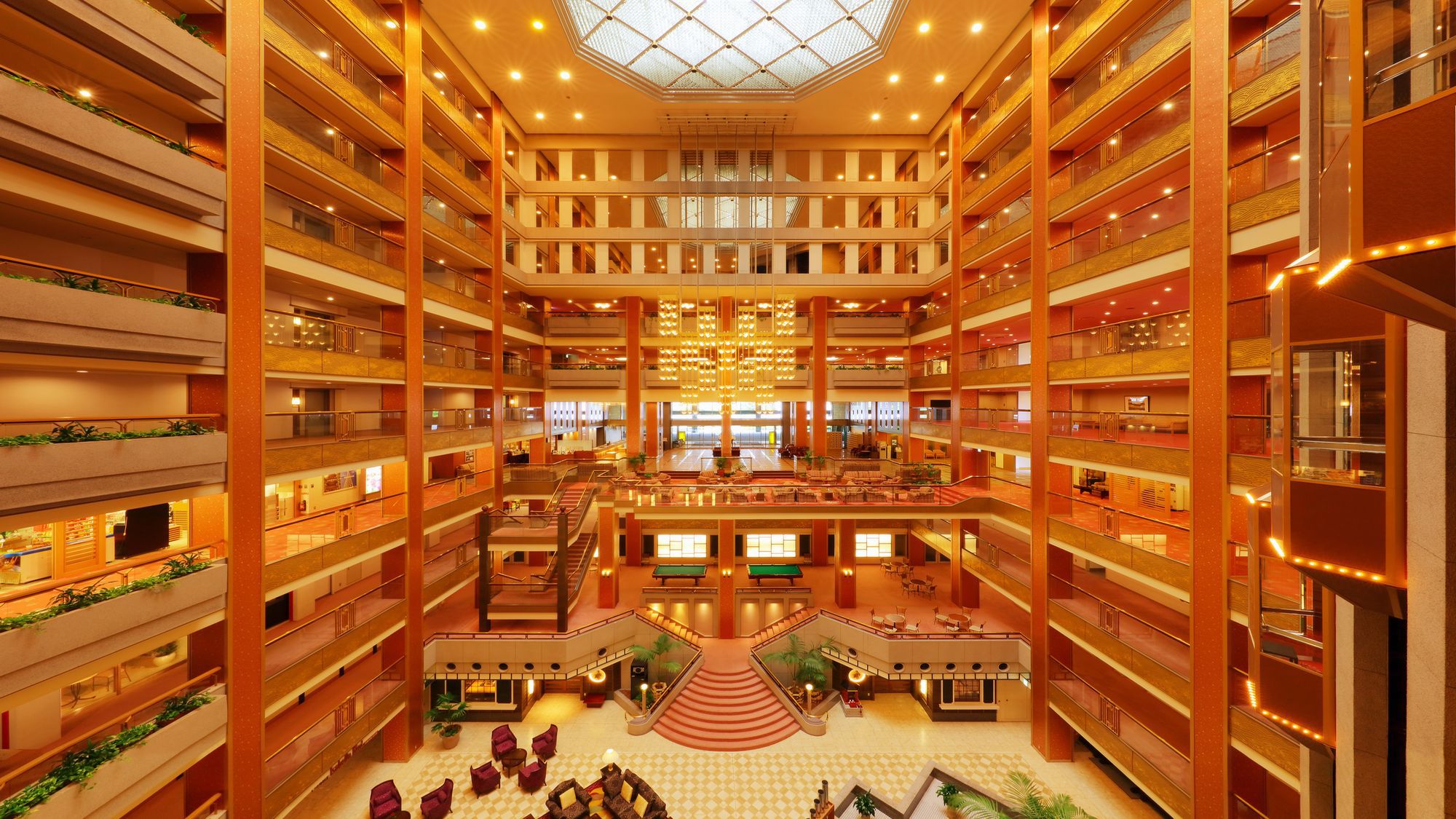
A lot of people have thought at some point, “I’d love to stay somewhere with a private open-air bath in the room.” But once you actually start looking, you hit a wall. Plans with a private open-air bath usually land somewhere around 40,000–50,000 yen per person per night, and once you multiply that by a family, you are easily over 100,000 yen.
That was the context in which Asaya came up as a candidate. It is a long-established ryokan in Kinugawa Onsen that shows up on Japanese TV fairly often. In particular, its buffet of more than 100 Japanese, Western and Chinese dishes is something a lot of people have seen on food and travel programmes.
To give the conclusion first: our household scored it 4 out of 5 from the husband and 4 out of 5 from the wife. The reasons it did not reach a perfect score, and the reasons it got as far as 4, are both very clear.
If we had to sum it up in one line: “The baths met expectations, the buffet fell short of them.” If you book because you saw that lavish buffet on TV and want to go eat it, you will probably be a little disappointed. Conversely, if you go for the baths, the satisfaction is exactly what you hoped for.
In this article we write up both the good and the underwhelming, with no punches pulled. There is one warning in particular that anyone planning a winter visit should read before booking.
* Rates, in-house services and meal contents vary by season and plan. The prices in this article are a guide confirmed as of July 2026, so please always check the official website for the latest information before booking.
What this article covers
- What it actually costs to stay in a “Japanese-Western room with view bath” in the Hachiban-kan wing (as of July 2026, around 70,000-something yen per night = 30,000-something yen per person), and how to judge that price (with a comparison calculation)
- An honest verdict on the taste of the 100-dish buffet that television keeps talking about
- The very practical problem we discovered by staying in February: the large communal baths are cold
- What the bathing options — the sky-garden open-air bath, the large communal baths, and the private-rental baths — are really like
- The seasonal jackpot we did not expect: the in-season strawberries were outstanding
- The breakdown behind the 4-and-4 scoring, and why it did not reach full marks
- How to judge whether this place suits you or not
Getting there from the nearest station
* The official guidance is about 10 minutes by Dial Bus. We walked it, and it was a fair way.
Open in Google MapsAsaya Hotel basics: getting the overall picture first
Asaya Hotel is a ryokan in Kinugawa Onsen, Nikko City, Tochigi Prefecture. According to the official website it was founded in 1888 (Meiji 21), which makes it one of the long-established properties in Kinugawa.
The building is broadly split into two wings, Shuho-kan and Hachiban-kan, and which one you stay in changes both the feel of the room and which large communal bath is convenient for you. This is a point worth understanding before you book, so we cover it in detail in a later section.
| Item | Details (from the official website / as of our visit) |
|---|---|
| Property name | Asaya Hotel (Kinugawa Onsen Asaya) |
| Address | 813 Kinugawa Onsen Taki, Nikko City, Tochigi Prefecture |
| Founded | 1888 (Meiji 21) |
| Guest room wings | Shuho-kan / Hachiban-kan |
| Room we stayed in | Hachiban-kan “Japanese-Western room with view bath” (10-tatami room + 2 semi-double beds + hiroen alcove / 57 m²; in-room facility is an indoor hot-spring bath) |
| Spring quality | Alkaline simple hot spring (own source, nicknamed “Kodakara-no-yu”) |
| Open-air bath | Shuho-kan 13th floor, sky-garden open-air bath “Shoryu-no-yu” |
| Large communal baths | Shuho-kan 1F “Momiji-no-yu” and “Asa-no-yu” / Hachiban-kan B1F “Taki-no-yu” |
| Private-rental baths | Shuho-kan 2F “Uchide-no-kozuchi-no-yu” (four types: Hoju, Hoken, Choji, Kakuregasa) |
| Dinner | Buffet with 100+ Japanese, Western and Chinese dishes; course menus also available |
| Nearest station | Tobu Kinugawa-Onsen Station |
| Getting there from the station | Dial Bus, approx. 10 min (adults 300 yen / children 150 yen) |
What jumps out from this table is that there are simply a lot of bathing options. Three large communal baths, one rooftop-level open-air bath, plus four private-rental baths. And then the in-room bath on top of that. Almost all of our satisfaction with this stay traces back to this one fact.
The most important thing to know before booking: “open-air bath” and “view bath” are not the same thing
Book with this misunderstood and you will definitely regret it, so we are putting it up front. Asaya’s in-room baths come in several types with confusingly similar names but genuinely different contents.
Looking at the in-room bath page on the official website, the room baths are broadly organised like this.
- Hachiban-kan: rooms with open-air bath / Japanese-Western rooms with view bath / baths in Japanese-style rooms with beds
- Shuho-kan: top-floor Japanese-Western room with view bath “Miyabi” / Precious Japanese-Western room with view bath / Superior Japanese-Western room with granite bath / top-floor Grand Twin with free-flowing view bath / Relaxation Japanese-Western room with view bath / baths in standard rooms
The thing to notice is that the wing explicitly described as having “rooms with open-air bath” is Hachiban-kan. The Shuho-kan side uses the wording “with view bath”, which means a bath from which you can enjoy the scenery through an indoor window.
Neither is better or worse. But if what you want is a genuine open-air bath where you sit out in the fresh air, check the room-type wording carefully. If you choose purely on the phrase “with bath”, you may end up in a room that is not what you pictured.
For the record, what we stayed in was the Hachiban-kan “Japanese-Western room with view bath”. Just as the official website’s room facilities state (“indoor hot-spring bath”), it is an indoor hot-spring bath with a large window, not an open-air bath exposed to the outside air. Hachiban-kan’s “room with open-air bath” is a different type that the official site describes as the only one in the building, so please do not confuse the two.
The official website also states that all in-room baths use hot spring water from the property’s own source. Being able to soak in an onsen without leaving your room is a strength shared by every one of these room types.
* The in-room bath runs quite hot, so we recommend adding cold water before you get in.
What was good: for the price, the bathing side is seriously strong
Starting with the good. Nearly everything in this section is why we gave it 4 points.
1. The Japanese-Western room with view bath is bookable at 30,000-something yen per person
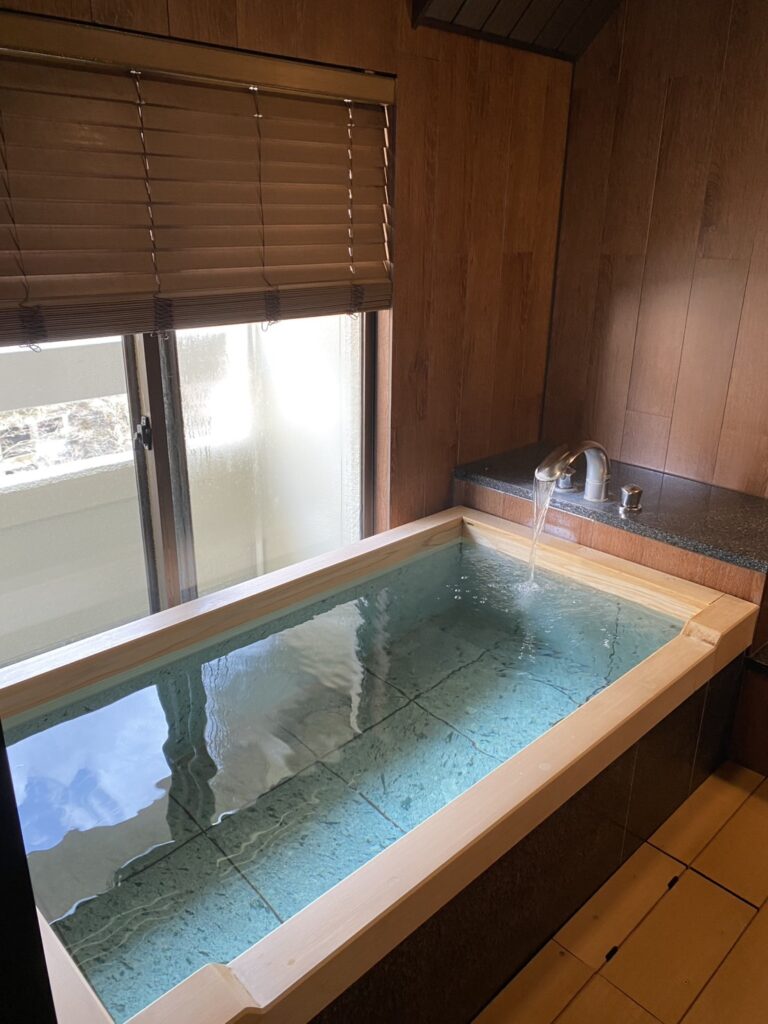
We stayed in the Hachiban-kan “Japanese-Western room with view bath” (the type with an indoor hot-spring bath in the room). Checking the same room type as of July 2026, you can book it for 70,000-something yen per night, or 30,000-something yen per person for two adults.
Whether that is cheap or expensive is hard to judge on instinct alone, so let us lay it out. Anyone who has hunted for a room with a hot-spring bath in it will know that the price jumps the moment that feature is attached. In particular, once you want a real open-air bath exposed to the outside air, it is not unusual to be looking at 40,000–50,000 yen per person, meaning 80,000–100,000 yen for two.
Because Asaya’s view-bath room is not an open-air bath, it does not climb that high. What you get is an in-room hot-spring bath you can use as much as you like for 30,000-something yen per person, with a 100-plus-dish buffet dinner included.
To be honest though, what really justifies this price is the sheer number of bathing facilities in the building, more than the in-room bath itself. Three large communal baths, the sky-garden open-air bath and four private-rental baths are all included in the room rate, and dinner and breakfast come on top. That combination at 30,000-something yen per person is, we felt, the real point when evaluating what this place costs.
| Comparison | Rough cost per night (picture two guests) | In-room bath |
|---|---|---|
| Typical onsen ryokan (no in-room bath) | Around 20,000–40,000 yen | None |
| Luxury ryokan with in-room open-air bath | Around 80,000–150,000 yen | Open-air bath |
| Asaya, Japanese-Western room with view bath (as of July 2026) | 70,000-something yen | Indoor hot-spring bath (view bath) |
* The table above is a rough estimate to give you a feel for the market. Actual rates move a great deal with season, day of the week, party size and plan, so please always check the official website.
In particular, prices tend to drop if you avoid long weekends and the New Year period. Conversely, in high season the same room shoots up. Rates move a lot by season even for an identical room type, so it is safer not to fix in your head that “Asaya costs X yen”.
2. Having a bath in the room matters more than you would expect
Getting to a communal bath means gathering a change of clothes, taking the lift, queuing in the changing room — a whole sequence of small chores. Having all of that collapse into your own room dramatically lowers the barrier to getting in the water.
What that produces in practice is simple: you bathe more often. Right after check-in, before dinner, before bed, first thing in the morning. With communal baths only, twice in one night is already doing well; with a room bath you end up going in four or five times. Satisfaction on an onsen trip is largely decided by total time spent soaking, so this really tells.
The meaning shifts again for families with small children. A communal bath is a place where you are constantly on alert — are they being noisy, are they running, are they bothering other guests. With a bath in the room, that tension disappears entirely. “Getting into an onsen without having to worry about anyone else” is worth far more to a family with kids than you would guess.
3. There are many kinds of bath, so you can do a circuit inside the building
The room bath was great, but the range of communal baths is more than sufficient too. We tried several, and it was genuinely fun.
According to the official website, the baths are laid out as follows.
- Sky-garden open-air bath “Shoryu-no-yu” (Shuho-kan 13F) — Asaya’s signature bath, with views over the mountains and the town of Kinugawa
- “Momiji-no-yu” and “Asa-no-yu” (Shuho-kan 1F) — well-equipped sauna facilities including a löyly sauna and a nano-mist sauna
- “Taki-no-yu” (Hachiban-kan B1F) — the large communal bath on the Hachiban-kan side
- Private-rental baths “Uchide-no-kozuchi-no-yu” (Shuho-kan 2F) — four types: Hoju, Hoken, Choji and Kakuregasa
The headline act is of course the 13th-floor sky-garden open-air bath. An open-air bath high up with a view out over the landscape is not something you get to do often. This one is worth going out of your way for.
The sauna facilities being this complete will be a big deal for some people too. Onsen ryokan with a löyly sauna are, in fact, not that common.
* If you go in winter, the large communal baths are extremely cold, so that is the one thing to watch out for.
4. The buffet’s variety is beyond reproach
We are about to be harsh about the food, but on the single measure of variety, it delivered exactly what was promised. Just as the official website advertises 100-plus Japanese, Western and Chinese dishes, the range of choice is enormous.
There is an open kitchen serving freshly fried tempura and steak, so there is a “cooked in front of you” element as well. Simply walking one lap of the room takes a fair while.
With a family, this variety is a blessing. Even when the adults and the kids want completely different things, one room covers everyone — that is the strength of a buffet.
5. The in-season strawberries were better than we imagined
This is purely a seasonal factor, but we want it on the record. We went in February, and at that time of year there were plenty of strawberries to eat.
And they were genuinely delicious. Our verdict on the buffet as a whole is fairly sharp, as you will see below, but the strawberries were in a different class. If we are honest, one of the reasons the wife’s score climbed to 4 was these strawberries.
Tochigi Prefecture is well known as a strawberry-growing region, and winter through spring is exactly its season. Seasonal fruit from the region it is grown in, served as much as you like — that alone can be a reason to go.
The flip side is that you do not get this experience if your timing is off. If the strawberries are the draw, book for the season. What is served may change from year to year, so check the official website or the plan details in advance.
Honestly, what fell short
This is the main reason we wrote this article. Good reviews are easy to find anywhere, so here is the part that was “not what we expected” once we actually stayed.
1. The buffet was “lots of dishes, ordinary flavour”
This was the biggest letdown. Both of us came away with the same impression.
Having seen TV and magazines say “Asaya’s buffet is amazing”, we went in with high expectations. The variety is real, and on that count it is exactly as advertised. But when it came to the taste of each individual dish, we did not find it that good.
It is not that it is bad. But asked whether it is food that moves you, our honest answer is that the quality is ordinary. Since both of us had gone specifically looking forward to the buffet, that gap stuck with us.
We think this is partly a structural problem with the buffet format. Serving 100 dishes simultaneously and constantly restocking them is a serious operation in itself. It is a fundamentally different design philosophy from a course menu that chases perfection in each individual plate.
So we are not saying “Asaya’s buffet is bad”. It is a question of where you set your expectations.
- Think of it as “a place with enough variety that everyone in the family can pick what they like” → it meets expectations
- Think of it as “a place where the food itself is the highlight of the trip” → you will probably feel the gap
Note that, according to the official website, Asaya also offers plans with a course menu. If you are the type who prioritises food quality, you may be happier considering that from the outset. If we go again, we think we would seriously look at that option.
2. The February open-air bath was simply freezing
The other miscalculation. We think it is because we visited in February, but the baths felt very cold.
To avoid any confusion: this is not about the water being cold. The problem is the time you are not in the water.
An open-air bath being cold is, in a sense, to be expected — but it was not just that. The indoor baths were also seriously cold.
With children along, this cold is a risk you cannot ignore. If it is hard on adults, it is a real burden on small children whose temperature regulation is still developing. If you are taking a young child in winter, we think it is more realistic to build the trip around the in-room bath.
On this point too, having booked the “Japanese-Western room with view bath” with its indoor hot-spring bath paid off. Having the escape route of “if it is cold, go back to the room bath” is a big reassurance on a winter onsen trip.
3. The expectation gap comes from the television coverage
Looking back, both of our complaints stem from having set expectations too high beforehand.
The buffet especially: if you go having watched glossy TV footage, a gap with the real thing is easy to create. Video is good at conveying the number of dishes and the buzz of the room, and cannot convey how each individual dish tastes.
That is less a failing of the property than a problem with how the information reaches you. Which is exactly why we think an honest write-up from someone who actually stayed has value.
Value check: how to take a figure of 30,000-something yen per person
“70,000-something yen for two” sounds expensive as a bare number, but breaking it down changes the impression.
- Accommodation (Japanese-Western room with view bath = a room with an indoor hot-spring bath)
- Dinner (buffet with 100+ dishes)
- Breakfast (buffet)
- Use of the hot-spring facilities in the building (sky-garden open-air bath, large communal baths, private-rental baths)
That is the all-in figure. Staying as two adults, it works out at 30,000-something yen per person. Once you factor in two meals, unlimited use of the hot-spring facilities and a hot-spring bath in your room, it should look rather different.
For comparison, a typical onsen ryokan with no in-room bath runs somewhere around 10,000–20,000 yen per person as a rough guide. In other words, an extra 15,000–25,000 yen per person buys you an onsen in your room.
Whether you read that premium as expensive or cheap is, we think, the dividing line in how you rate this property.
Practical tips for getting 120% out of Asaya
1. Accept the meal as “a place to enjoy variety”
Adjusting your expectations in advance is the single biggest trick to enjoying this place. Think of it as “time to try a little of a lot of unusual dishes” and 100 varieties becomes a real weapon. Demand perfection in an individual plate and you will certainly come away deflated.
2. If food matters most, look at the course plan
According to the official website, plans with a course menu are available. If you want food to be the centrepiece of the trip, picking that from the start should make a mismatch with your expectations far less likely.
3. Treat the baths as a circuit and plan them
There are multiple communal baths and private-rental baths on top. Drift through the stay and you will only manage two of them, so deciding at check-in “this time we will do these ones” raises your satisfaction.
4. If you go in winter, plan around staying warm
The cold in the communal baths in February was beyond what we imagined. With children, the safe approach is to skip the communal baths and build around the in-room bath.
5. Book to hit the season
For us it was strawberries. Aiming for the period when seasonal local produce is on the buffet changes the density of the experience for the same money. What is in season depends on the time of year, so check the plan details before booking.
Who we would and would not recommend this to
Recommended for
- People who want both an in-room hot-spring bath and a circuit of the building’s baths, on a realistic budget — this property’s greatest strength
- People who can make the baths themselves the point of the trip — communal, open-air and private-rental options are plentiful
- Families with small children — a room bath means you are not on edge in the communal baths
- Families who all want to eat different things — 100 dishes earns its keep
- People who can book to catch seasonal produce — the winter-to-spring strawberries were a hit
Harder to recommend for
- People whose main purpose is the quality of the food — the buffet tastes “ordinary”; look at the course plan instead
- People who saw it on TV and have strong expectations about the taste — expectations need adjusting
- People who want a long, leisurely soak in the communal baths in midwinter — February was colder than we imagined
- People looking for a quiet, small property — this is a large hotel, so the building tends to be lively
Our rating (out of 5)
At Kozure Tabi we score every property we have actually stayed at on the same five criteria, each out of 5. To keep the standard consistent from one property to the next, we always use the same five: travelling with kids, travelling with dogs, bath and sauna, food, and value. The overall score is our editorial judgement on the stay as a whole. Criteria that do not apply are marked "Not applicable" and excluded from the overall score.
Facilities check for children and dogs
Here are the items we end up asking about every single time we choose a property with a child or a dog. The figures and yes/no answers are based on what is stated on the official website.
| Item | Details |
|---|---|
| Cot / baby bed | Not listed among the loanable items (ask the property) |
| Co-sleeping and child rates | Age 0 free / ages 1–2 a facility fee of 2,200 yen / preschoolers (3–5) 50% of the adult rate / primary school children 70%. Primary schoolers and preschoolers are provided with a meal and futon, and the rate is the same even if they co-sleep and do not need a futon |
| Baby food | No mention of it being served. A formula-preparation pot and a steam steriliser case for bottles are available to borrow |
| Baby items for loan | Waterproof bed sheet (70×90 cm) / bottle steam steriliser case / formula-preparation pot / step stool (15 cm high) / toilet seat insert / nappy disposal pot / Bumbo seat. Ask at the front desk. Limited quantities |
| Children in the baths | Not stated on the official website (ask the property) |
| Kids’ space | Kids’ room “Warabe” (Shuho-kan 5F). Outdoor pool in summer |
| Dogs | Not permitted (the official website states that stays accompanied by pets are not accepted) |
* Confirmed on 26 July 2026 on the Asaya Hotel official website (FAQ and loanable items). Facilities and rates are subject to change, so please always check the official website for the latest information before booking.
Frequently asked questions
Q. So do you recommend Asaya’s buffet or not?
A. Recommended as a place to enjoy variety; not recommended as a place to expect great flavour. The range really is huge, so it suits people who want to try a lot of things. But if you want to be wowed by the execution of an individual dish, we think you would be happier considering a course-menu plan.
Q. Roughly what does the Japanese-Western room with view bath cost?
A. When we checked as of July 2026 it was 70,000-something yen per night (30,000-something yen per person for two adults). This price varies a great deal with season, day of the week, party size and plan. Long weekends and high season are likely to be higher, so please always check the official website.
Q. Is it all right to go in winter?
A. Staying itself is no problem at all, but our honest experience is that the communal baths in February were pretty cold. If you are not set on the communal baths, you can enjoy it plenty.
Q. Is it all right with children?
A. With so many bathing options, we felt it suits families with children well. Having a bath in the room in particular cuts down the situations where you have to worry about other guests in the communal baths. The buffet also has the advantage of making it easy to find things children will eat.
Q. How many different baths can you use?
A. According to the official website there is the sky-garden open-air bath “Shoryu-no-yu”, the communal baths “Momiji-no-yu”, “Asa-no-yu” and “Taki-no-yu”, and the private-rental baths “Uchide-no-kozuchi-no-yu” (four types). Add the in-room bath and there are more options than you can get through in one night.
Q. What is the spring quality?
A. The official website describes it as an alkaline simple hot spring from the property’s own source, and uses the nickname “Kodakara-no-yu” (the spring of fertility).
Q. Can you walk there from the station?
A. The official website says about 10 minutes by Dial Bus. On a trip with luggage, the bus or a taxi is the realistic option.
* The two of us walked it, but it was a fair way from the station, so we would suggest taking a taxi or the bus.
Summary: choose it as a “bathing property” and the satisfaction is high
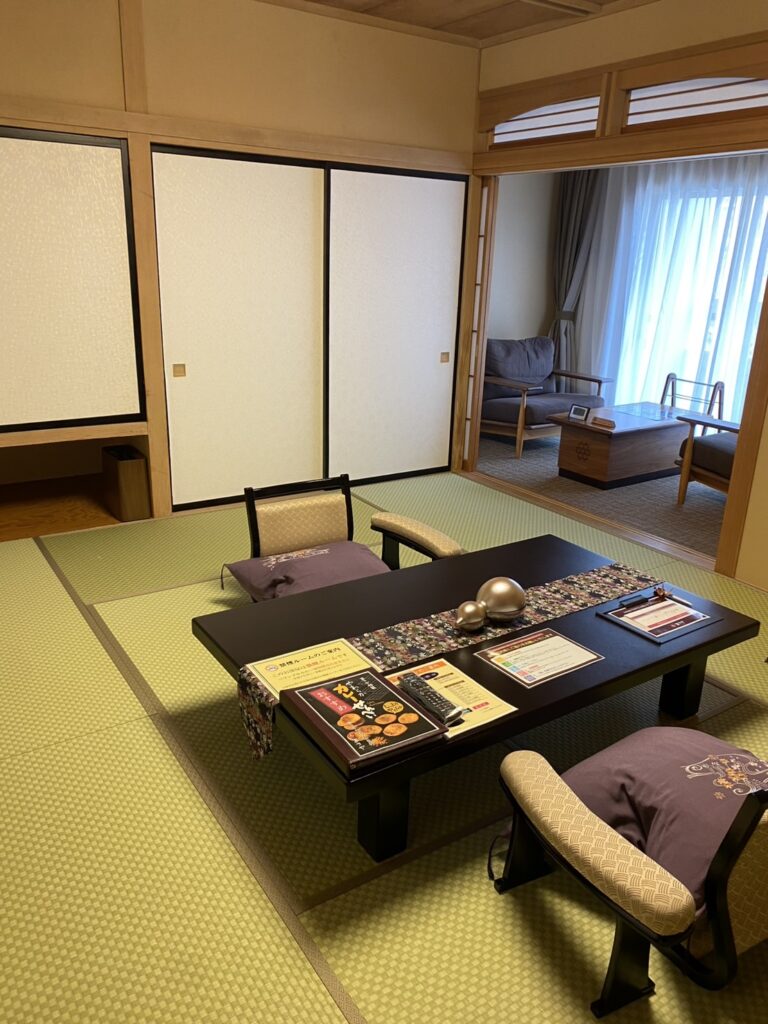
- Good: the value of a Japanese-Western room with view bath at 30,000-something yen per person / the range — sky-garden open-air bath, three communal baths, four private-rental baths / sauna facilities / in-season strawberries
- Bad: the buffet has variety but ordinary flavour / the communal baths are pretty cold in February
- Scores: husband 4, wife 4 (out of 5). The deduction was the buffet for both
- Verdict: choose it for the baths rather than the food and it delivers more satisfaction than the price suggests
How you rate this place is almost entirely decided by what you go for. Make the lavish buffet you saw on TV your main objective and you will snag on the gap with your expectations. Go with the aim of “getting into the room’s hot-spring bath over and over and doing a circuit of the building’s baths”, and 30,000-something yen per person is, we think, a level that makes sense.
The reason we stopped at 4 is, honestly, that we expected too much of the buffet. If we went again, we would either pick a course-menu plan, or expect nothing from the food and put all of that time into the baths instead.
Kinugawa Onsen is relatively easy to reach from Tokyo and slots neatly into a family trip. For a household that wants to try “a trip where the bath is in your room” once, we think this is a realistic option.
References
- Kinugawa Onsen Asaya Hotel official website (Japanese)
- Asaya Hotel | Hot springs and baths (Japanese)
- Asaya Hotel | In-room baths (Japanese)
- Asaya Hotel | Access (Japanese)
- Asaya Hotel | Hachiban-kan guest rooms (Japanese)
- Nikko City Tourism Association (Japanese)
- Tochigi Prefecture Tourism Association | Tochigi Tabi Net (Japanese)
* The facility information in this article is a guide based on the time of our visit and on what is published on the official website. Rates, meal contents and the operation of the bathing facilities are subject to change, so please always check the official website for the latest information before booking.